

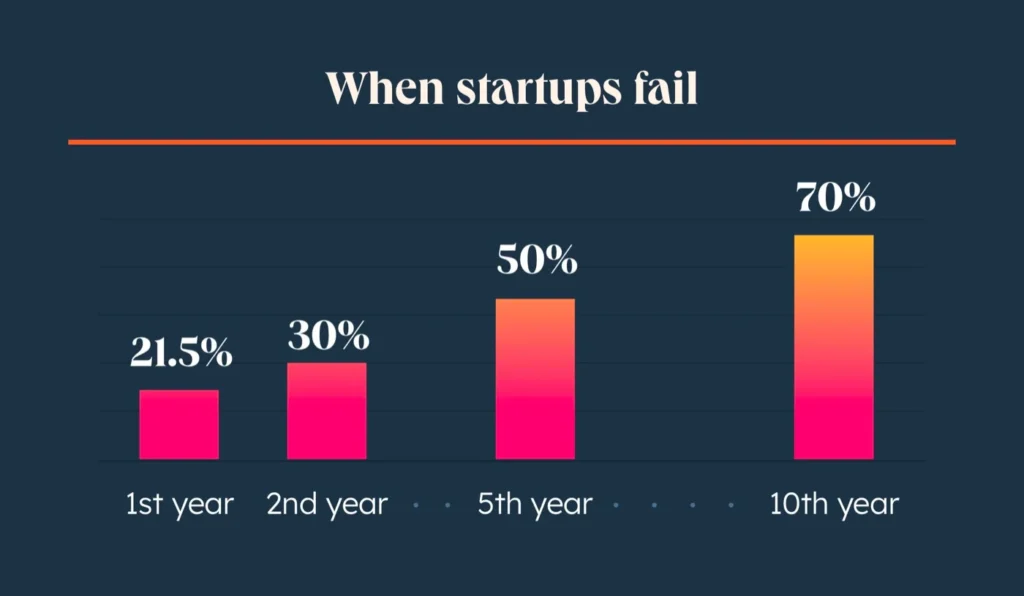
In November 2022, I spent over three hours facilitating a financial management course at the Justice Entrepreneurship School (JES) Program in Lagos. JES is an initiative of the FATE Foundation in partnership with the Hague Institute for Innovation in Law (HiiL). The program is aimed at West African entrepreneurs who are in the early stages of their businesses and have innovative ideas for businesses in the justice sector of economies.
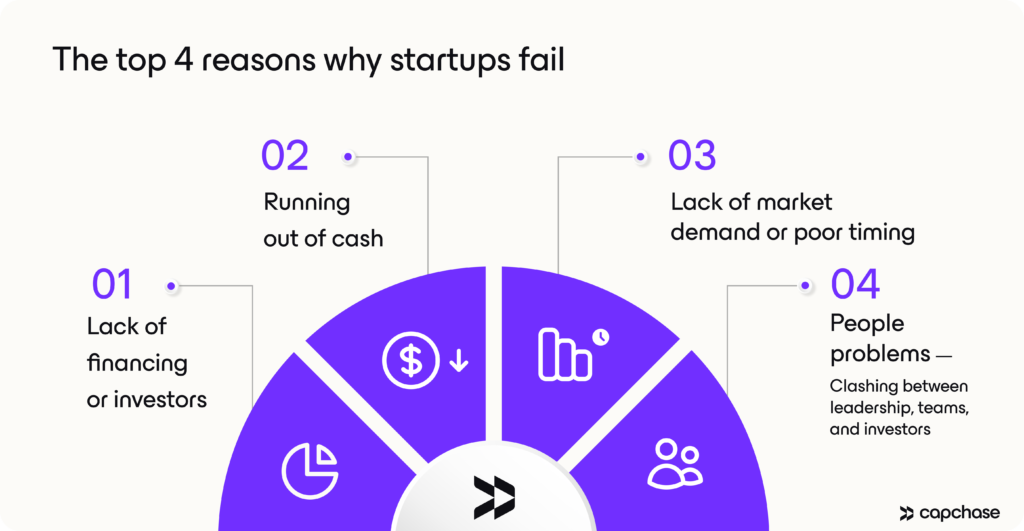
During my research, I discovered that more than 50% of the founders interviewed by Failory.com did not have a budget for their project, and 75% were self-funded, yet only 16% blame financial problems for failure. This is because testing and validating concepts do not require a lot of money (you need effort). Financial issues primarily affect later-stage startups because you need money to grow an already validated concept.
This discovery influenced the topics I discussed with the entrepreneurs during the program. My presentation’s goal was to persuade the audience to pay attention to financial management. I’ll try to share some of my talking points in this article.
Bookkeeping as a Fundamental Financial Management Tool
Many people who intend to start a new business sometimes overlook the importance of matters such as keeping records. Bookkeeping involves the regular recording of a company’s financial transactions. With proper bookkeeping, companies can track all information in their books to guide key operating, investing, and financing decisions.
A company that maintains proper financial records can prepare financial statements, which can be a useful source of information for internal and external stakeholders. Financial statements are written records that convey the financial position and performance of a company.
| SN | Item | Purpose | Formula | Used By |
| 1 | Balance Sheet | To know your financial position | Assets = Liability + Owners’ Equity | Not-for-Profit and For-Profit Firms |
| 2.1 | Income Statement | To know your profit or loss | Profit = Revenue – Expenses | For-Profit Firms |
| 2.2 | Income and Expenditure Statement | To know the operating surplus or deficit | Surplus/(Deficit)=Income – Expenses | Not-for-Profit Firms |
| 3 | Cashflow Statement | To understand your sources of cash flows | Closing Cashflow = Opening Cashflow+ Cash inflow – Cash outflow | For-Profit Firms |
Budgeting as a Crucial Financial Management Tool
It is crucial for businesses to properly manage their funds and allocate budgets for them to function properly. A budget can direct and help control a business’s finances toward its objectives. The first step to effective financial management in an organization is preparing your budget. Comprehensive budgeting can help a business:
- Anticipate problems or obstacles
- Define common goals
- Achieve objectives
- Continue to improve
Types of Budgets
- Budgeted Income Statement: A budgeted income statement focuses on future estimates of income and expenditure for the year or other specified period.
- Budgeted Cashflow Statement: A cash flow budget estimates your business’s cash flow over a specific period. You can use the information to see if you have enough cash coming in to maintain regular operations over the given timeframe. It can also give insight into how to allocate your budget effectively.
- Budgeted Balance Sheet: A budgeted balance sheet is a financial document that presents the estimated value of a startup’s assets, liabilities, and equity in the foreseeable future.
Budgetary Control
This refers to regularly comparing actual performance with the plan to identify whether corrective action is required. Consider using the 5-column approach to monitor your budget, below is an example from an income statement.
| SN | Item | Budget (A) | Actual (B) |
Variance (B – A) |
Improvement Action Required |
| 1 | Revenue | 30,000,000 | 40,000,000 | 10,000,000 | Good performance, but more revenue is required to reach the profit target |
| 2 | Expenses | 20,000,000 | 35,000,000 | 15,000,000 | investigate expense items and control costs. |
| 3 | Net Profit | 10,000,000 | 5,000,000 | – 5,000,000 | Minimize expenses and increase revenue |