
Building a Scalable Operating System for a Recurring-Revenue Business

How a growing connectivity provider stopped its admin workload rising in step with its subscriber numbers, by connecting the whole customer lifecycle in one system.

Clients

Enterprise connectivity and technology services provider

Industry

Telecommunications and technology services

Services

Digital operating-model design, workflow automation, application integration

Pathway

Grow Profitably

The Situation

The company sold connectivity equipment and provided subscription services to enterprise customers. Two very different things to manage, and they had to be managed together.

Several business applications were already in place. The problem was that none of them talked to each other. Sales, fulfilment, finance and support each held a version of the customer, and keeping those versions aligned was somebody’s manual job.

That worked at a certain size. As the subscriber base grew it stopped working. Nobody could see a customer’s journey end to end, from first enquiry through activation to renewal. Equipment moved without anyone tracking where it had gone. Renewals came up without warning. Overdue balances surfaced late.

The real cost was structural: every new customer added administrative work, so growth in revenue meant growth in overhead at roughly the same rate. That is a ceiling, and the company was approaching it.

What we did

We designed a phased digital operating architecture covering the whole customer lifecycle, from the first enquiry to the renewal notice.

The sequencing mattered as much as the design. We standardised data and processes first, then automated the workflows, then integrated the applications, and only then built the analytics on top. Automating a messy process just produces mess faster.

Inside the work

The architecture connected lead capture and opportunity management through to customer onboarding and commercial approvals, then into product and service plan information, sales orders and inventory availability. Equipment allocation, movement and delivery were brought into the same flow, so a physical router and a recurring subscription could be tracked against the same customer record.

On the financial side we connected customer invoicing and recurring billing, subscription start dates, renewals and cancellations, and receivables with collection follow-up. Customer enquiries, complaints and service issues joined the same record, so a support conversation and a billing conversation were no longer separate universes.

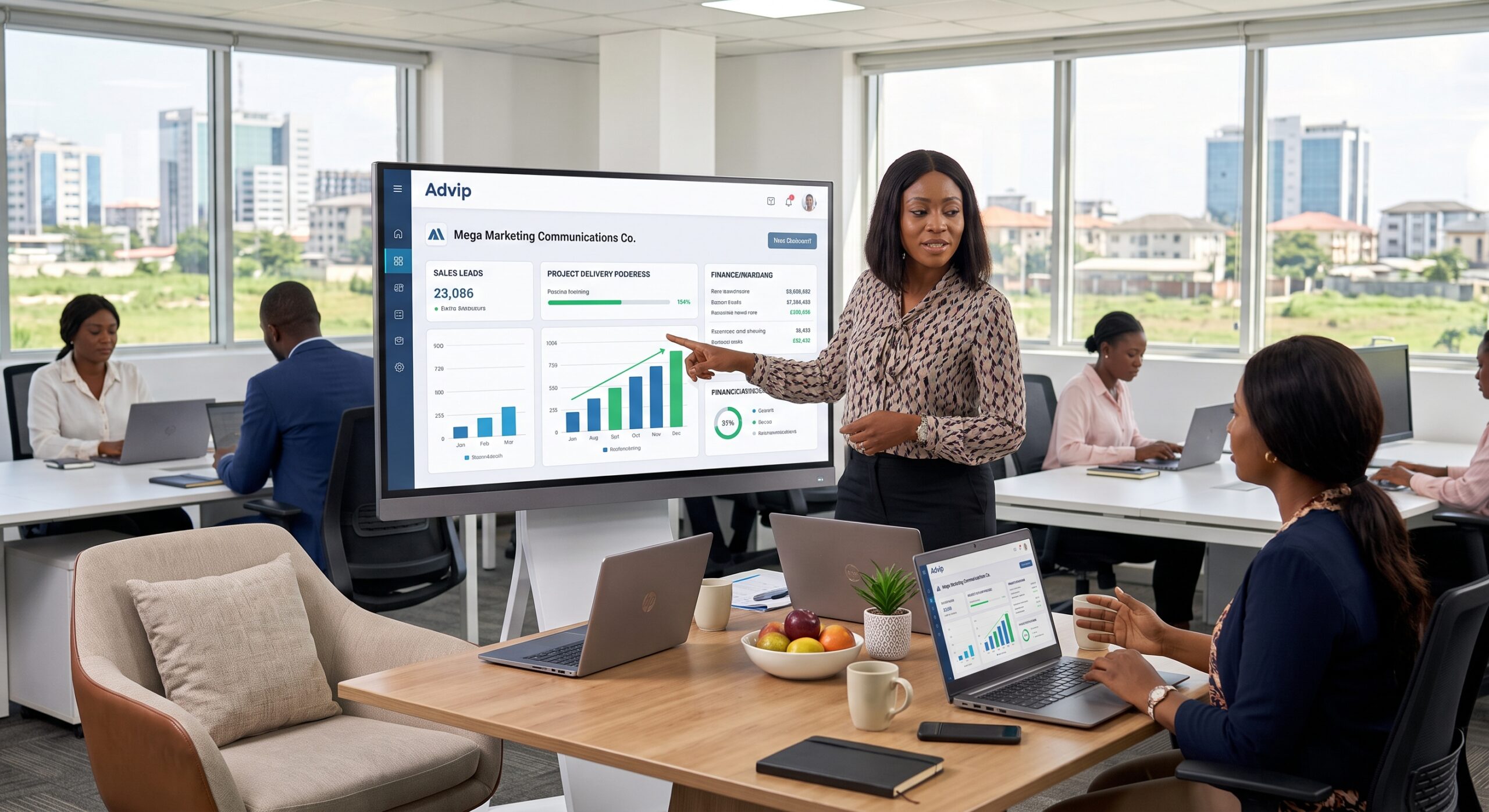
Above all of it sat management dashboards and operational reporting covering pipeline, active subscribers, recurring revenue and outstanding balances.

The design gave each stage a clear owner. That is the part that removed the informal emails, the shared spreadsheets and the verbal handovers that the old way depended on.

The outcome

  • One connected customer record shared across every department
  • Faster customer onboarding and service activation
  • Visibility into inventory and equipment movement
  • Active subscriptions and recurring revenue properly monitored
  • Consistent renewal and billing processes
  • Faster follow-up on outstanding balances
  • Customer service issues tracked against the customer record
  • Manual handovers and spreadsheet dependency substantially reduced
  • Capacity to handle more customers without the same rise in admin workload

Does this sound familiar?

If every new customer adds a predictable amount of administrative work, your growth has a ceiling built into it. Connecting the systems is how you raise it. Our Grow Profitably pathway is built for businesses at exactly this point.
Grow
icon
Case Studies

Turning technology into business results

These engagements show how we work. Each began with an operational problem rather than a piece of software.